What is visual identity: a guide for business owners
TL;DR:
- Visual identity is a system of visual elements that communicate a brand’s personality and recognition. It includes logo, color palette, typography, imagery style, and graphic devices, which must align with the brand’s strategy. Developing and maintaining a cohesive, adaptable visual system builds trust and long-term recognition for businesses.
Visual identity is defined as the complete system of visible elements a brand uses to communicate who it is at a glance. It covers everything from a logo and colour palette to typography, imagery, and graphic devices. Together, these elements form a cohesive visual language that signals your brand’s personality before a single word is read. For business owners, entrepreneurs, and freelancers, understanding this system is the first step towards building lasting recognition and standing apart in a crowded marketplace.
What is visual identity and what does it include?
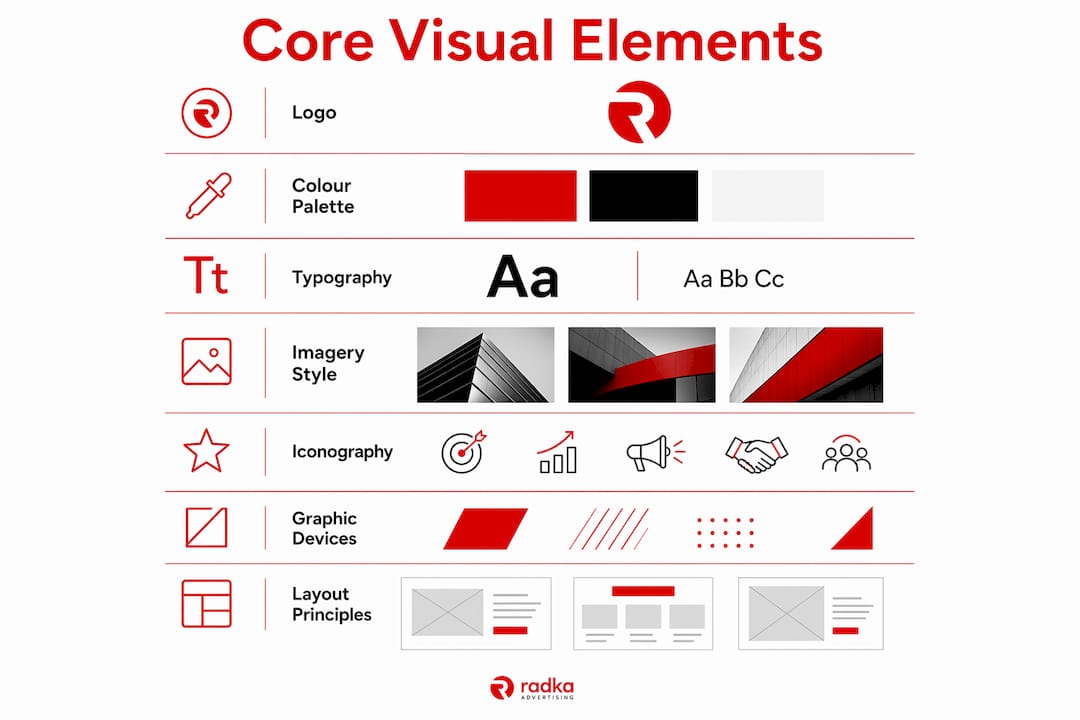
Visual identity is the visible expression of a brand, built from a coordinated set of design elements that work as a system rather than a collection of isolated assets. A well-built visual system typically includes 6–8 core components: colour palette, typography, logo, imagery style, iconography, graphic devices, and layout principles. Each element carries meaning on its own, but the real power comes from how they interact.
Think of it this way. Your logo is the anchor. Your colour palette sets the emotional tone. Your typography communicates whether your brand feels authoritative, friendly, or creative. Imagery style determines whether your brand looks polished and aspirational or raw and documentary. Iconography and graphic devices provide visual consistency across touchpoints where a full logo would not fit.
The goal of this system is not simply to look attractive. Visual identity’s primary purpose is to be instantly recognisable and representative of your brand’s personality. Recognition triggers trust, and trust reduces the perceived risk a new customer feels when choosing you over an alternative.
The core elements at a glance
| Element | Role |
|---|---|
| Logo | Primary brand mark; the anchor of all visual communication |
| Colour palette | Sets emotional tone and aids instant recognition |
| Typography | Communicates brand personality through font choice and hierarchy |
| Imagery style | Defines the visual mood across photography and illustration |
| Iconography | Provides visual shorthand for navigation and brand language |
| Graphic devices | Patterns, shapes, and lines that add consistency across formats |
| Layout principles | Grid and spacing rules that create visual order and coherence |
Pro Tip: Choose your visual elements based on your brand’s personality, not personal preference. A financial services firm and a children’s toy brand may both use bright colour, but the specific hues, typefaces, and imagery styles should reflect entirely different emotional promises.
How does visual identity differ from brand identity?
Brand identity is the broader concept. It includes your brand’s values, mission, tone of voice, personality, and the emotional experience you want customers to associate with your name. Visual identity is one part of brand identity. It is the visible layer that brings all those intangible qualities to life in a form people can see and feel.
The distinction matters because many business owners build a visual identity without first defining their brand identity. The result is a logo and colour scheme that look professional but communicate nothing specific. A well-designed visual system without a clear brand strategy behind it is decoration, not communication.
The two concepts overlap and must align. Your brand identity answers the question: who are we and what do we stand for? Your visual identity answers: how do we show that to the world?
Here is where they differ and where they connect:
- Brand identity includes values, mission, tone of voice, personality, and positioning.
- Visual identity includes logo, colour palette, typography, imagery, and graphic devices.
- Overlap: Both must reflect the same core personality. A brand that claims to be bold and disruptive but uses beige and serif fonts sends a contradictory signal.
- Dependency: Visual identity cannot be built well without brand identity as its foundation.
- Output: Brand identity produces strategy documents and messaging frameworks. Visual identity produces design assets and style guides.
For consistent and credible branding, both layers must be developed together and maintained in alignment over time.
What is the process for creating a strong visual identity?
Building a visual identity that holds up across years and platforms requires a staged process, not a single design session. Skipping stages is the most common reason business owners end up with a visual system that feels inconsistent or needs replacing within two years.
-
Define your brand strategy. Before any design work begins, clarify your brand’s mission, values, personality, and positioning. This is the brief that every design decision must answer to.
-
Analyse your audience. Understand who you are communicating with. Age, cultural context, and the platforms your audience uses all influence which visual choices will resonate. A B2B software firm and a lifestyle brand may share an audience age range but require entirely different visual languages.
-
Design your visual system. Working with a designer or agency, develop your logo, colour palette, typography, and supporting elements. Test each element in context, not just in isolation. A logo that looks strong on a white background may disappear on a dark social media banner.
-
Document everything in a brand style guide. Style guide documentation is mandatory for maintaining consistency. Your guide should define clear space rules around the logo, minimum logo sizes, approved colour combinations, typeface hierarchy, and imagery guidelines. Without this document, your visual identity will drift.
-
Apply consistently across all channels. Roll out your visual system across your website, social media profiles, email templates, packaging, and any physical materials. Consistency is what converts a set of design assets into a recognisable brand.
-
Build for responsiveness. Modern visual identities require logos and graphic elements that adapt across touchpoints, from mobile app icons to physical signage. A logo that only works at large scale will fail in a social media profile picture or a favicon.
Pro Tip: The most common pitfall is treating the style guide as a one-time deliverable. Revisit and update it whenever you launch a new product line, enter a new market, or refresh your brand. A living document prevents the gradual brand dilution that happens when teams make small, undocumented design decisions over time.
Brand consistency across platforms is not a design preference. It is a business discipline that directly affects how customers perceive and remember you.
Why does visual identity matter for business success?
Visual identity builds professional trust before a conversation takes place. When a potential customer lands on your website, receives your proposal, or sees your social media profile, their brain forms a judgement within seconds. A coherent, well-executed visual system signals that you are credible, established, and worth their attention.
Visual identity is an investment, not an expense. It reduces the perceived risk a new customer carries when choosing an unfamiliar brand. That reduction in risk directly improves conversion rates, customer retention, and the ability to charge a premium for your product or service.
“The primary goal of visual identity is not to look good. It is to look like you, consistently, across every touchpoint where a customer might encounter your brand.”
The business benefits of a well-executed visual identity include:
- Faster recognition. Consistent use of colour, typography, and logo across channels trains customers to recognise your brand without reading your name.
- Stronger differentiation. A distinctive visual system separates you from competitors who rely on generic design templates.
- Increased trust. Professionalism in design signals professionalism in service. Customers associate visual quality with operational quality.
- Better marketing performance. Consistent visual assets across campaigns produce stronger recall and higher engagement than mismatched creative.
- Long-term brand equity. A well-maintained visual identity accumulates recognition over time, making each new campaign more effective than the last.
Visual storytelling amplifies all of these benefits by giving your brand a narrative that customers can follow and connect with emotionally.
Key takeaways
A strong visual identity is the single most visible investment a business owner can make in long-term brand recognition and customer trust.
| Point | Details |
|---|---|
| Visual identity is a system | It combines logo, colour, typography, imagery, and graphic devices into one cohesive language. |
| It differs from brand identity | Brand identity is the strategy; visual identity is the visible expression of that strategy. |
| Documentation prevents drift | A brand style guide is mandatory to maintain consistency across teams and platforms. |
| Responsiveness is now standard | Logos and elements must adapt across mobile, social media, and physical formats. |
| It is a business investment | A coherent visual system builds trust, reduces customer risk perception, and improves conversion. |
Visual identity in 2026: what I have seen change
The shift I have noticed most clearly over the past few years is that business owners no longer ask “do we need a logo?” They ask “does our visual system work everywhere?” That is a significant change in thinking, and it reflects how much the environment has changed.
Static assets are no longer sufficient. Dynamic visual identity systems with responsive logos, motion elements, and AI-assisted design workflows are now the standard expectation for brands operating across digital and physical channels. What used to require a full design team can now be prototyped quickly, but speed without a clear strategy still produces weak results.
The misconception I encounter most often with entrepreneurs is the belief that a visual identity is finished once the logo is approved. In reality, a visual identity requires ongoing maintenance. Without a comprehensive style guide, consistency degrades within 6–12 months as teams make small, undocumented decisions that slowly pull the brand in different directions.
My honest advice: treat your visual identity as a living system. Schedule a review every 12 months. Check whether your assets still work across your current platforms. Update your style guide when your product or audience evolves. The brands that stay recognisable over time are the ones that treat consistency as a discipline, not an afterthought.
— Bart
How Radkaadvertising approaches visual identity
Radkaadvertising is a London-based agency with a track record of building visual identity systems for brands across multiple industries, including work with clients such as Coca-Cola, Maybelline, and PowerLink Energy. The agency combines brand strategy with creative design to produce visual systems that are built for recognition from day one. For business owners and entrepreneurs who need more than a logo, Radkaadvertising offers end-to-end brand development, from initial strategy through to style guide documentation and multi-channel rollout. You can review their brand case studies to see how they have approached visual identity challenges across different sectors, or visit Radkaadvertising to learn more about their services.
FAQ
What is the definition of visual identity?
Visual identity is the complete system of visible design elements, including logo, colour palette, typography, and imagery, that a brand uses to communicate its personality and create recognition.
What are the main elements of visual identity?
The core elements are logo, colour palette, typography, imagery style, iconography, graphic devices, and layout principles. Together, they form a consistent visual language across all brand touchpoints.
How is visual identity different from brand identity?
Brand identity includes values, mission, tone of voice, and personality. Visual identity is the visible expression of those qualities through design. Both must align for a brand to communicate consistently.
How long does it take to create a visual identity?
The timeline varies by scope, but a thorough process covering strategy, design, and style guide documentation typically takes several weeks to a few months. Rushing the process produces assets that require costly revision within a year.
Why does visual identity matter for small businesses and freelancers?
A coherent visual identity signals credibility and professionalism to potential clients before any conversation takes place. It reduces the perceived risk of working with a newer or smaller brand, which directly supports conversion and growth.