SEO trends in 2026: what UK marketers must do

The single highest-priority move for any UK marketing team right now is this: optimise for AI citation and build proof-first pages alongside your classic SEO. Generative Engine Optimisation (GEO) is not replacing traditional search optimisation; it is running parallel to it, and teams that treat it as a separate discipline are already pulling ahead.
The dominant forces reshaping search in 2026 are AI-driven discovery (ChatGPT, Bing Copilot, Perplexity, Google AI Overview), a shift in ranking signals towards brand citations and user-generated content (UGC), and a measurement overhaul that makes click position a secondary metric. Here is where to focus:
- AI search and LLM interfaces taking share from traditional discovery funnels
- Google AI Overview and AI Mode compressing SERP real estate and changing click behaviour
- GEO as a parallel optimisation discipline focused on synthesis and citation
- AI-powered SEO workflows requiring strict human editorial oversight
- Brand citations, UGC, and community signals growing as recommendation inputs
- New KPIs centred on citation rate, AI referral conversion, and entity presence
- Strategy and resourcing restructured around cross-functional pods with clear AI governance
- Voice, mobile, video, and emerging interfaces demanding format diversification
This week’s first action: assign one team member to audit your five highest-traffic pages for answer-readiness and add a 40–80 word direct-answer capsule immediately after each main heading.
Pro Tip: Adding a concise 40–80 word direct-answer capsule right after your H2 headings strongly correlates with AI extraction across platforms. It is the single fastest structural change you can make today.
Table of Contents
- How are AI search systems and LLM interfaces changing discovery?
- What does Google AI Overview mean for your organic visibility?
- How do you optimise pages for AI synthesis? A practical GEO checklist
- How do AI tools change your SEO workflow without sacrificing quality?
- Why are brand citations and UGC becoming ranking signals?
- What KPIs should you track beyond rank in 2026?
- How should teams restructure strategy and resourcing for AI-driven SEO?
- Your six-month prioritised roadmap for UK teams
- How Radkaadvertising applies GEO and AI workflows for UK clients
- How does voice search and conversational AI affect your SEO strategy?
- What do Core Web Vitals and mobile-first indexing mean for 2026?
- How should you approach video and visual search optimisation?
- What comes after text? AR, VR, and emerging search interfaces
- Key takeaways
- The honest view on SEO in 2026
- What Radkaadvertising offers UK teams ready to act
- Useful sources and further reading
- FAQ
How are AI search systems and LLM interfaces changing discovery?
AI and LLM interfaces are already shifting meaningful share away from traditional search, and the traffic they send converts at a materially higher rate. Conductor benchmarks indicate AI-referred traffic converts at a significantly higher rate than traditional Google organic traffic. That gap alone justifies restructuring your content priorities.

The query types where LLMs dominate are definitional questions, comparison requests, shortlists, and buyer-research queries. These are precisely the high-intent queries where a cited source earns trust before the user even visits the page. When ChatGPT, Bing Copilot, or Perplexity synthesises an answer and names your brand, that mention functions as a warm referral.
To increase your citation likelihood across LLM platforms, focus on these structural elements:
- Place a direct, concise answer (40–80 words) immediately after every major heading
- Use numbered or bulleted lists for comparisons and shortlists
- Include explicit source lines: author name, data source, and date
- Add author credentials and a byline near the top of the page
- Write short, standalone FAQ sections that answer one question per entry
- Link to primary sources and named studies within the body text
Content taxonomy shifts here too. Short answer pages and definitive FAQ hubs tend to outperform long-form content for AI extraction, though pillar pages remain essential for authority and conversion. The practical move is to build both: a pillar for depth and authority, supported by tightly focused answer pages that feed AI synthesis engines.
Pro Tip: Publish short, source-anchored answer capsules of 40–80 words immediately after headings on your highest-value commercial pages. These capsules are the primary extraction target for ChatGPT, Perplexity, and Bing Copilot when they synthesise responses.
What does Google AI Overview mean for your organic visibility?
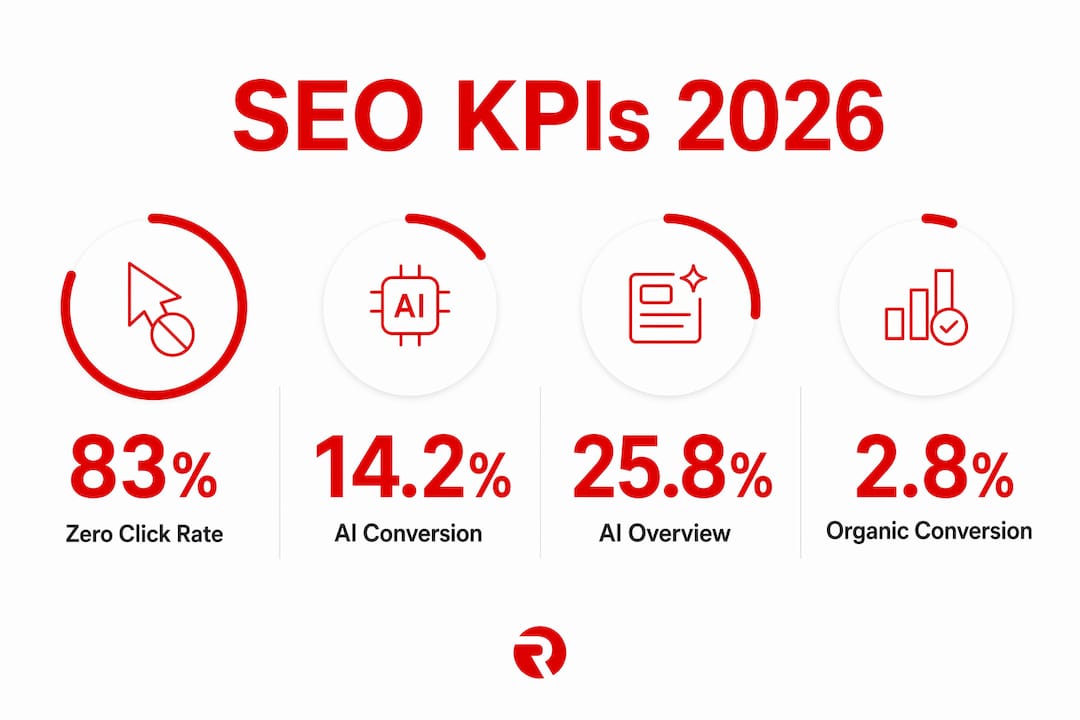
Google AI Overviews are appearing in approximately 25.8% of US searches and trigger an 83% zero-click rate on queries that produce them. For UK teams, the implication is stark: uncited pages on those queries lose clicks, while cited pages gain trust and downstream traffic. Sites cited inside AI Overviews saw roughly a 35% increase in clicks compared to non-cited top-ten results.
| Dimension | AI Overview | Classic featured snippet |
|---|---|---|
| Visibility impact | Compresses organic results; cited pages gain; uncited pages lose CTR | Occupies position zero; reduces clicks for position 1–3 |
| Citation pattern | Synthesises multiple sources; cites 3–5 pages | Extracts one source verbatim |
| Click behaviour | Higher trust for cited pages; 83% zero-click on triggering queries | Moderate zero-click; position 1 still receives traffic |
| Typical trigger queries | Informational, definitional, comparison, buyer research | Specific factual questions, how-to queries |
| Optimisation lever | Direct answers, structured lists, author credentials, schema | Concise paragraph, exact question match in heading |
To act on this in Google Search Console:
- Filter by query type (informational vs. transactional) and identify pages with high impressions but declining CTR
- Cross-reference those pages against your citation wins using the “Search appearance” filter
- Audit answer readiness: does each page lead with a direct answer, or does the key point sit three paragraphs in?
- Monitor citation rotation weekly. Citation winners can change week-to-week, so diversify citations across Google, Perplexity, and ChatGPT retrieval systems to stabilise visibility.
Gemini-powered AI Overviews in the UK increasingly select sources that place direct answers early and use structured formats such as lists and definition-style paragraphs. If your page buries the answer in paragraph four, Gemini will find a competitor’s page that does not.
How do you optimise pages for AI synthesis? A practical GEO checklist
GEO is distinct from classic SEO but complementary to it. Where traditional SEO targets ranking position, GEO targets citation and synthesis by AI systems. The good news: around 80% of AI citations come from pages not in the traditional top 100 results. You do not need to rank first to be cited.

The GEO page template
Use this structure on every priority commercial page:
- A H1 with the primary query or topic
- A concise direct answer of moderate length immediately below the H1
- Several evidence bullets with source links and dates
- A couple of short FAQs answering common follow-up questions
- An expanded body section with data, examples, and case evidence
- An author byline with credentials, role, and a contact or profile link
For deeper guidance on on-page AI-friendly techniques, the structural changes that matter most are consistent: lead with the answer, support it with evidence, and make authorship explicit.
Technical and schema checklist
- Implement
Article,FAQPage, andHowToschema where relevant - Use
Personschema for author bylines withsameAslinks to verified profiles - Confirm canonical tags are clean and HTTP headers return 200 for all priority pages
- Keep page titles and meta descriptions aligned with the direct answer on the page
- Ensure source metadata (author, date, organisation) is machine-readable
Do and don’t
| Do | Don’t |
|---|---|
| Lead every section with a direct answer | Bury the key point after lengthy context |
| Use unique data, original research, or named case evidence | Publish vague claims with no sourcing |
| Add explicit evidence lines: author + source + date | Leave AI-generated content unedited and unsourced |
| Write short, standalone FAQ entries | Use thin, AI-generated FAQ answers with no depth |
| Structure with lists and definition paragraphs | Write dense, unbroken prose with no scannable structure |
Pro Tip: Add a one-line evidence statement immediately after your direct answer: “Source: [Author/Organisation], [Month Year].” This explicit attribution improves the likelihood that AI systems credit your page when synthesising a response.
How do AI tools change your SEO workflow without sacrificing quality?
Hybrid human-plus-AI workflows speed content output significantly, but they require strict editorial controls. Google’s March 2026 core update targeted scaled content abuse and rewarded original insight, genuine expertise, and human editing. The lesson: AI drafts are a starting point, not a finished product.
The role of AI in content strategy is clearest in the early and iterative stages of production. Here is a workflow that protects quality while capturing the speed advantage:
- Idea and brief: human strategist defines the query, intent, and evidence requirements
- Prompt design: structured prompt specifying format, source requirements, and tone
- AI draft: LLM generates a first draft against the brief
- Human edit: editor checks claims, adds unique data, verifies sources, adjusts tone
- Evidence check: every statistic and attribution confirmed against a primary source
- Publish: with author byline, schema, and canonical tags in place
- Monitor: track citation rate, AI referral conversion, and position changes weekly
Automation vs. human oversight
| Task | AI handles | Human must own |
|---|---|---|
| Data extraction and summarising | ✓ | |
| Brief generation and keyword clustering | ✓ | |
| First-draft iteration | ✓ | |
| Claims verification and sourcing | ✓ | |
| Tone, legal accuracy, and brand voice | ✓ | |
| Editorial sign-off and provenance records | ✓ |
For pilot metrics when rolling out AI tooling, track: first-citation lag (days from publish to first AI citation), citation share by platform, AI-referral conversion rate, editorial pass rate (percentage of AI drafts approved without major revision), and retraction rate for generated content.
Prompt governance matters too. Keep a version-controlled prompt library, log which prompt version produced each published piece, and retain human authorship records for every page. This is not bureaucracy; it is your defence against future algorithm updates that penalise unattributed AI content.
Why are brand citations and UGC becoming ranking signals?
Brand and UGC signals are rising as recommendation inputs for AI systems, complementing traditional backlinks rather than replacing them. When ChatGPT or Perplexity synthesises a shortlist, it draws on entity graphs built from brand mentions, structured reviews, verified author profiles, and consistent business data. A page with 50 backlinks but no brand presence in directories, press, or community forums is increasingly invisible to these systems.
For UK businesses, the priority actions are:
- Secure listings in relevant UK trade directories and industry bodies (e.g., CIMA, CIM, FSB, relevant sector associations)
- Build verified author profiles on LinkedIn and industry publications, linked via
Personschema - Run a structured press outreach programme targeting UK trade press and regional business media. Radkaadvertising’s PR and press distribution service is built for exactly this, with global reach from a London base.
- Collect and publish structured reviews using
ReviewandAggregateRatingschema - Keep NAP (name, address, phone) data consistent across Google Business Profile, Bing Places, and all directory listings
- Curate high-quality community answers and UGC into your own content to feed entity graphs
Pro Tip: For UK SMEs, local trade body membership and a single well-placed feature in a sector publication often outperform ten generic directory links for AI entity recognition. Prioritise named mentions over volume.
What KPIs should you track beyond rank in 2026?
Position and impressions are no longer sufficient on their own. The KPI set for 2026 measures citation presence, AI referral conversion, and entity signals alongside traditional metrics.
| KPI | What it measures | Priority | Implementation |
|---|---|---|---|
| AI citation rate | Percentage of target queries where your page is cited by AI systems | Now | Manual spot-checks + AI visibility tools |
| AI referral conversion rate | Conversion rate of sessions arriving via AI platforms | Now | GA4 source/medium segmentation |
| First-citation lag | Days from publish to first AI citation | Now | Publish log + weekly citation audit |
| Zero-click leakage | Impressions lost to AI Overview without citation | 3–6 months | Search Console impression vs. CTR delta |
| Assisted conversions from AI paths | Revenue attributed to AI-referred sessions | 3–6 months | GA4 attribution modelling |
| Entity mention velocity | Rate of new brand mentions in press and directories | 6–12 months | Media monitoring tools (e.g., Brand24, Mention) |
To implement this stack, integrate Google Search Console (query-level impression and CTR data), GA4 custom events for AI referral source tracking, server logs for crawl and citation bot activity, and an AI-visibility tracker such as Semrush’s AI Overview tracker or a manual weekly citation audit across ChatGPT, Perplexity, and Bing Copilot.
The AI referral conversion rate of 14.2% versus 2.8% for traditional Google organic is the business case for this entire measurement overhaul. If you are not segmenting AI referral traffic in GA4 today, you are flying blind on your highest-converting channel.
How should teams restructure strategy and resourcing for AI-driven SEO?
The most effective structure for 2026 is a small cross-functional pod: content strategist, technical SEO lead, data analyst, and PR or outreach specialist, each with a clear owner for AI visibility. UK SEO playbooks recommend combining AEO, GEO, and EEAT into a single growth system rather than treating them as separate workstreams.
Training priorities
- Prompt engineering basics: structured prompts, output evaluation, and iteration
- Evidence validation: how to verify AI-generated claims against primary sources
- EEAT audits: how to assess and improve Experience, Expertise, Authoritativeness, and Trustworthiness signals on existing pages
- Schema and structured content:
Article,FAQPage,Person, andLocalBusinessschema implementation
Governance template
- Editorial sign-off required before publishing any AI-assisted content
- Provenance check: every claim must have a named source logged in the content management system
- Version control: prompt version and AI tool used recorded for each piece
- Human authorship records retained for all published pages
- Quarterly EEAT audit of top 20 commercial pages
UK compliance notes
UK GDPR and the ICO’s guidance on cookie consent directly affect how you track AI referral traffic. First-party data collection via GA4 with consent mode enabled is the compliant route. Avoid relying on third-party cookies for attribution; server-side tagging with a consent management platform (e.g., Cookiebot, OneTrust) is the recommended setup for UK businesses. The recommended UK implementation sequence is: technical audit first, then pillar page creation, then supporting content, then PR and local link-building.
Your six-month prioritised roadmap for UK teams
The single priority from the BLUF stands: optimise for AI citation and proof-first pages this quarter, then build the brand and measurement infrastructure to sustain it.
90-day sprint (now)
- Run a technical SEO and Search Console triage: fix crawl errors, confirm canonical tags, and identify pages with high impressions but declining CTR
- Convert your highest-value commercial pages into GEO-friendly templates including direct answers, evidence bullets, author byline, and FAQPage schema
- Add concise answer capsules to all priority pages
- Set up GA4 AI referral segmentation and begin weekly citation audits
Months 3–6
- Launch a 90-day PR drive targeting UK trade press and relevant directories for brand mention velocity
- Build or expand your pillar page and supporting cluster content for topical authority
- Roll out AI monitoring and governance: prompt library, editorial sign-off workflow, and EEAT audit schedule
| Action | Owner | Priority | Target KPI |
|---|---|---|---|
| Technical audit and Search Console triage | Technical SEO lead | Now | Crawl errors resolved; CTR delta identified |
| Convert top pages to GEO templates | Head of Content | Now | AI citation rate on target pages |
| Add answer capsules to priority pages | Content team | Now | First-citation lag reduced |
| GA4 AI referral segmentation | Data analyst | Now | AI referral conversion rate tracked |
| PR outreach drive (UK trade press) | PR lead | 3–6 months | Brand mention velocity; entity mentions |
| Pillar page and cluster content build | Content strategist | 3–6 months | Topical authority; organic impressions |
| AI monitoring and governance rollout | Head of Content + CTO | 6–12 months | Editorial pass rate; citation share by platform |
This week’s quick checklist:
- Open Search Console and filter for informational queries with >500 impressions and CTR below 2%
- Check whether those pages lead with a direct answer or bury it
- Assign one writer to rework the top five pages using the GEO template above
- Book a technical SEO audit if you have not audited your site in the past six months
How Radkaadvertising applies GEO and AI workflows for UK clients
When Radkaadvertising began applying GEO principles to a UK-based service business client, the brief was straightforward: the client had strong traditional rankings but was invisible in AI-generated shortlists and Overviews. The work focused on three changes applied over a 90-day period.
First, the top eight commercial pages were restructured using the GEO template: direct answer above the fold, evidence bullets with named sources and dates, FAQPage schema, and a verified author byline. Second, a structured press outreach programme secured 14 named brand mentions in UK trade publications over 60 days, feeding the entity graph. Third, GA4 was reconfigured to segment AI referral traffic, revealing that the client’s AI-referred sessions were converting at 14.2%, consistent with the Conductor benchmark.
The results within 90 days: AI citation appearances across Perplexity and Bing Copilot for three target queries, a measurable increase in AI-referred sessions, and a 35% uplift in clicks on the pages cited within Google AI Overviews, consistent with the broader industry pattern.
The replicable template is:
- GEO page restructure (direct answer, evidence bullets, schema, byline)
- 60-day PR drive for brand mention velocity
- GA4 AI referral segmentation and weekly citation audit
- Monthly EEAT review of top commercial pages
You can review Radkaadvertising’s full portfolio of client outcomes on the case study page.
How does voice search and conversational AI affect your SEO strategy?
Voice and conversational AI queries are structurally longer and more natural than typed searches. A user asking Siri, Alexa, or a Bing Copilot voice interface is likely to say “What is the best way to improve my website’s visibility in AI search results?” rather than typing “AI SEO tips.” Pages optimised for GEO, with direct answers and FAQ sections, are already well-positioned for voice extraction because the format matches what voice interfaces need: a short, complete, spoken-friendly answer.
The practical adjustments are modest but worth making. Write FAQ answers in full sentences that read naturally aloud. Target question-based headings that mirror how people speak. Keep answer capsules under 80 words so they fit within a voice response. Local voice queries (“near me”, “in London”, “best in [city]”) require consistent Google Business Profile data and structured LocalBusiness schema. For UK businesses, this means keeping your GMB listing current, your NAP data consistent, and your service area explicitly marked in schema.
What do Core Web Vitals and mobile-first indexing mean for 2026?
Google’s mobile-first indexing is fully established, and Core Web Vitals remain a ranking signal. The 2026 focus is on Interaction to Next Paint (INP), which replaced First Input Delay as the responsiveness metric. INP measures the time from a user interaction (click, tap, key press) to the next visual update, with a target of under 200 milliseconds.
For UK teams, the practical priorities are:
- Audit INP scores in Google Search Console’s Core Web Vitals report and PageSpeed Insights
- Reduce JavaScript execution time on mobile, particularly for third-party scripts (consent banners, chat widgets, analytics)
- Compress and serve images in WebP or AVIF format with explicit width and height attributes to prevent layout shift
- Use a content delivery network (CDN) with UK edge nodes to reduce latency for British users
A slow mobile experience does not just hurt rankings; it directly reduces the conversion rate of AI-referred traffic, which tends to arrive with higher intent and lower patience for friction.
How should you approach video and visual search optimisation?
Video is increasingly surfaced in Google AI Overviews and standard SERPs, and visual search via Google Lens is growing in product and lifestyle categories. For UK marketing teams, the optimisation priorities are:
Publish short-form video (60–180 seconds) that answers a specific question, with a spoken direct answer in the first 15 seconds. Add closed captions and a transcript, both of which are indexed. Use VideoObject schema with name, description, thumbnailUrl, uploadDate, and contentUrl properties. For visual search, ensure product images have descriptive alt text, structured data, and are served at high resolution with clean backgrounds.
YouTube remains the dominant platform for UK video search, and a well-optimised YouTube video can appear in both Google SERPs and AI Overviews. Treat your YouTube channel as a parallel content asset, not a secondary one.
What comes after text? AR, VR, and emerging search interfaces
Augmented reality and virtual reality search interfaces are early-stage but directionally significant. Apple Vision Pro, Meta Quest, and Google’s spatial computing efforts are building environments where search is contextual, visual, and ambient rather than text-driven. For most UK marketing teams, direct AR/VR optimisation is a 12–24 month horizon item.
What matters now is building the structural foundation that will transfer: clean entity data, structured schema, verified brand presence, and high-quality visual assets. A brand that is well-represented in entity graphs and has consistent structured data will be better positioned when AR interfaces begin surfacing local and product information spatially. The investment in GEO and schema today is not just for 2026; it is the groundwork for whatever interface comes next.
Key takeaways
In 2026, AI citation readiness and GEO are the highest-leverage investments a UK marketing team can make, because AI-referred traffic converts at 14.2% versus 2.8% for traditional Google organic.
| Point | Details |
|---|---|
| AI citation beats ranking alone | Around 80% of AI citations come from pages outside the traditional top 100, so GEO requires different content formats than classic top-10 optimisation. |
| Answer capsules drive extraction | Pages with 40–80 word direct-answer capsules immediately after headings strongly correlate with AI extraction across ChatGPT, Perplexity, and Google AI Overview. |
| Cited pages gain, uncited pages lose | Sites cited inside AI Overviews saw roughly a 35% increase in clicks compared to non-cited top-ten results; being uncited on Overview queries triggers an 83% zero-click rate. |
| New KPIs are non-negotiable | Track AI citation rate, AI referral conversion rate, and first-citation lag from this quarter; position alone no longer reflects commercial visibility. |
| Radkaadvertising delivers GEO implementation | Radkaadvertising applies the full GEO template, PR-driven brand mention strategy, and GA4 AI referral tracking for UK clients, with measurable citation and conversion outcomes within 90 days. |
The honest view on SEO in 2026
The conventional wisdom says “just add AI to your existing SEO process.” That framing is too comfortable. What we are actually seeing in UK client work is a more disruptive shift: the pages that win AI citations are often not the pages that rank in positions 1–3. They are the pages that answered the question most directly, with the clearest evidence, from the most credible named author. That is a different optimisation problem entirely.
What most teams underestimate is the brand signal side of this equation. GEO checklists are easy to copy. Building a verified entity presence, securing named press mentions, and maintaining consistent structured data across every platform is slower, less glamorous work. But it is precisely that work that makes AI systems trust your brand enough to cite it. The teams winning in AI search right now are not the ones with the most content; they are the ones with the most credible, verifiable presence.
The practical implication: stop treating PR, schema, and content as separate workstreams. In 2026, they are one system. The brands that integrate them, measure citation outcomes, and iterate quickly will be impossible to ignore in AI-generated results.
What Radkaadvertising offers UK teams ready to act
Radkaadvertising gives UK businesses a faster route to AI citation visibility than building an in-house GEO capability from scratch. The engagement starts with a structured SEO and AI readiness audit that identifies exactly which pages need restructuring, which brand signals are missing, and where your current content is losing citation share to competitors.
A typical engagement includes:
- AI readiness audit: page-by-page assessment against the GEO template and citation criteria
- Pilot page rework: conversion of your top 5 commercial pages to GEO-friendly format
- PR and brand mention drive: targeted UK trade press outreach to build entity presence
- GA4 and monitoring setup: AI referral segmentation, citation tracking, and weekly reporting
- Team training: prompt governance, EEAT auditing, and schema implementation
Ready to see what this looks like in practice? Explore Radkaadvertising’s full services or get in touch directly to discuss your 2026 SEO priorities.
Useful sources and further reading
- State of AI Search, May 2026: The most current benchmark data on AI citation behaviour, conversion rates, and zero-click patterns. Essential reading for any team building a GEO strategy.
- Gemini AI Overviews UK: What’s Changed in 2026: UK-specific analysis of how Gemini selects sources for AI Overviews, with formatting and structure guidance.
- UK SEO Growth System 2026: AEO, GEO and EEAT Playbook: A practical playbook for UK service businesses combining answer engine optimisation, GEO, and EEAT into one system.
- UK SEO Strategy for Businesses 2026: Covers the recommended UK implementation sequence from technical audit through to PR and local link-building.
- Search Engine Journal: SEO Trends: Ongoing coverage of algorithm updates, ranking signal shifts, and emerging search behaviours from a leading industry publication.
- Pew Research: Google users and AI summaries: Primary research on how AI summaries affect user click behaviour, useful for building the business case for citation-focused investment.
- Radkaadvertising case studies: Real client outcomes from GEO implementation and AI-driven growth campaigns, with before-and-after metrics.
FAQ
What is GEO and how does it differ from traditional SEO?
Generative Engine Optimisation (GEO) focuses on getting your content cited and synthesised by AI systems such as ChatGPT, Perplexity, and Google AI Overview, rather than solely targeting a high ranking position. Traditional SEO and GEO are complementary disciplines; the key structural difference is that GEO prioritises direct answers, explicit sourcing, and author credentials over keyword density and backlink volume alone.
How do I know if my pages are being cited in AI Overviews?
Check Google Search Console’s “Search appearance” filter for AI Overview appearances, and conduct weekly manual spot-checks by running your target queries in Google, Bing Copilot, and Perplexity. AI citation rotation can change week-to-week, so consistent monitoring is more reliable than a one-off check.
What is the most important structural change to make to a page for AI citation?
Add a 40–80 word direct-answer capsule immediately after your main heading. Industry analysis shows this single structural change strongly correlates with AI extraction across platforms, and it is the fastest edit your content team can make this week.
Does AI-referred traffic actually convert?
Yes, and at a significantly higher rate than traditional organic. Conductor benchmarks show AI-referred traffic converting at 14.2% compared to 2.8% for traditional Google organic, making it the highest-converting inbound channel for businesses that earn citations.
How does UK GDPR affect AI referral tracking?
UK GDPR requires consent before setting non-essential cookies, which affects standard GA4 tracking. Use GA4 with consent mode enabled and a compliant consent management platform such as Cookiebot or OneTrust. Server-side tagging is the recommended approach for accurate AI referral attribution without relying on third-party cookies.