30–90 Day LinkedIn Lead Generation Playbook for B2B Teams

LinkedIn generates qualified B2B leads when you combine tight audience targeting, native capture tools like Lead Gen Forms, and follow-up sequences that don’t feel automated. The highest-return mix is Sponsored Content with Lead Gen Forms for scale, Sales Navigator outreach for high-value accounts, and organic content for compounding, low-cost inbound. Results build over weeks, not days, so measurement discipline from day one matters more than any single tactic.
TL;DR:
- Combining precise audience targeting with Lead Gen Forms and follow-up sequences boosts qualified lead volume on LinkedIn.
- Organic content takes eight to twelve weeks to generate inbound conversations, while paid campaigns with Lead Gen Forms can produce results within weeks.
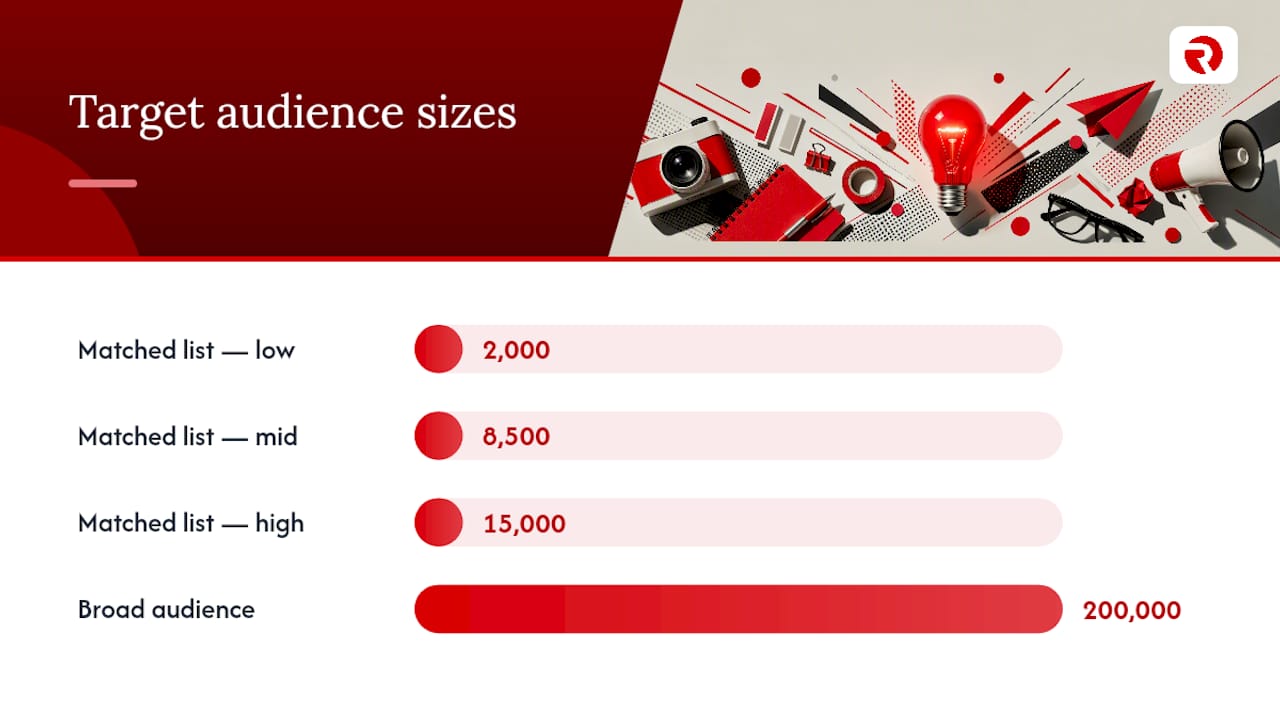
- Narrowing target audiences to 2,000–15,000 prospects reduces costs and improves lead quality compared to broad, untargeted outreach.
- A well-structured outreach sequence includes personalized connection requests, value-driven messages, and low-pressure follow-ups spaced over two weeks.
- Proper measurement with CRM tracking, KPIs, and ongoing A/B testing is essential for optimizing campaign performance and scaling effectively.
Table of Contents
- How LinkedIn lead generation works: organic, outbound and paid at a glance
- Using LinkedIn Lead Gen Forms and ad formats effectively
- How to build an outreach sequence that actually converts
- Account-based targeting and Sales Navigator workflows
- Measurement, attribution and the KPIs that matter
- Automation, integrations and safe scaling
- Radka Advertising perspective and practitioner notes
- Expert viewpoint: when LinkedIn should be your priority
- How Radka Advertising builds and runs your LinkedIn lead engine
- Sources
- FAQ
How LinkedIn lead generation works: organic, outbound and paid at a glance
Three engines drive results on the platform, and most successful programmes run at least two of them at once.
Organic relies on a properly optimised profile, a consistent posting rhythm, and employee amplification. A founder or salesperson posting two to three times a week, backed by a handful of colleagues resharing and commenting, typically needs eight to twelve weeks before the content starts pulling in inbound conversations. It’s slow, but the cost per lead trends towards zero over time.
Outbound means using Sales Navigator to build precise prospect lists, then running them through personalised, multi-touch sequences rather than a single cold pitch. This is where deal size justifies the manual effort. A rep working 30 to 50 targeted accounts a week, with proper research behind each message, will consistently outperform someone blasting 300 generic connection requests.
Paid covers Sponsored Content, Message Ads and Conversation Ads. LinkedIn’s own lead generation guide frames this as targeting by persona, pairing it with the right content, then distributing it against a measurable revenue goal. Lead Gen Forms accelerate volume once you know your message resonates. Paid doesn’t replace organic or outbound, it compresses the time it takes either to produce pipeline.
Matching the approach to your business looks like this:
- High deal value, long sales cycle → Sales Navigator outreach, ABM-style targeting
- Mid-market, repeatable offer → Sponsored Content with Lead Gen Forms
- Limited budget, strong subject-matter expertise → organic content and employee advocacy
- Enterprise sale with multiple stakeholders → all three, sequenced together
Using LinkedIn Lead Gen Forms and ad formats effectively
Lead Gen Forms pull data straight from a member’s LinkedIn profile and pre-fill it into the form, which is why LinkedIn positions them as a friction-reducing alternative to sending traffic off-platform. A prospect taps “submit” rather than typing out their job title and company for the fifth time that week. Keep the form itself lean: three to six fields is the practical ceiling before completion rates start dropping. Name, work email, company and job title cover most qualification needs without asking someone to write an essay.
The trade-off is qualification depth. Forms convert well precisely because they ask so little, which means some of what lands in your CRM will be curious rather than ready to buy. External landing pages ask more of the visitor (a longer form, sometimes a calendar booking) and filter harder, so they suit high-intent offers where you’d rather have fewer, better leads than a bigger raw number.
A simple way to decide which format to run:
- Webinar or guide download, awareness stage — use a Lead Gen Form, keep the offer low-commitment
- Product demo or consultation request — use an external landing page with a booking widget, since intent is already high
- Case study or ROI calculator — either works, but a form with a follow-up qualifying question performs well
- Conversation Ads for multi-step offers — let the prospect choose their own path through a decision tree rather than forcing one CTA
For creative, anchor every ad around a specific, named outcome rather than a vague promise. “How [Industry] Teams Cut Onboarding Time by Half” beats “Download Our Guide” every time. Start pilots with a modest daily budget across two or three ad variants, run for at least a week before judging performance, then reallocate spend towards whichever creative and audience combination is producing the cheapest qualified lead, not just the cheapest click.
Pro Tip: Run your Lead Gen Form offer and an external landing page version of the same offer simultaneously for the first two weeks. The volume-versus-quality gap tells you more about your actual sales capacity than any benchmark article will.
How to build an outreach sequence that actually converts
A good sequence respects the person on the other end. It doesn’t pitch on the first message, and it doesn’t disappear after one follow-up.
- Day 0, connection request — no pitch. Reference something specific: a recent post, a shared connection, a company announcement. One sentence is enough.
- Day 1 to 2, thank-you and value note — once accepted, send something useful with no ask attached. A relevant article, an observation about their market, a genuine compliment on their work.
- Day 5, soft opener — introduce the problem you solve, framed around what you noticed about their business, not a generic feature list.
- Day 9, case-based follow-up — share a short example of how you’ve helped someone in a similar position. Ask a question rather than proposing a call outright.
- Day 14, direct but low-pressure close — ask if a fifteen-minute conversation would be useful. If there’s no response, let the sequence end. Persistence beyond this point reads as desperation.
Personalisation cues worth referencing include recent posts, funding announcements, leadership changes and hiring surges in a relevant department. Avoid opening with “I see you’re the Head of Marketing at X” (they know their own job title) and never ask for a meeting in message one.
Commenting thoughtfully on a prospect’s posts before sending a connection request measurably increases acceptance and reply rates, because you show up as a familiar name rather than a stranger.
Track connection acceptance rate, reply rate, and meetings booked per hundred outreach attempts. If acceptance sits below 30% for a well-targeted list, the connection note needs work before anything else. If replies stall despite strong acceptance, the value proposition or timing is off, not the volume.
Pro Tip: Never send the same opening line to two people in the same week. LinkedIn’s algorithm and recipients both notice repetition, and it’s the fastest way to look automated even when a human wrote every word.
Account-based targeting and Sales Navigator workflows
Account-based marketing on LinkedIn starts with a properly defined ideal customer profile, not a broad job-title list. Independent B2B playbooks consistently find that matched-audience campaigns targeting a real buying committee outperform broad targeting once the ICP is genuinely precise.
The practical workflow runs like this:
- Refine your ICP down to company size, industry, and specific pain points you solve
- Build and save prospect lists inside Sales Navigator against those filters
- Upload the account list as a matched audience in Campaign Manager
- Run Sponsored Content aimed at multiple stakeholders within each target account, not just one decision-maker
Narrower audiences reduce wasted spend. A list of 2,000 to 15,000 precisely matched prospects will typically outperform a 200,000-person audience on cost per qualified lead, because you’re not paying to reach people who were never going to buy.
Watch for trigger events: a target account raising funding, a relevant leadership hire, or a competitor’s contract renewal window closing. Acting on these signals within 24 hours, while the context is still fresh, produces noticeably warmer conversations than reaching out weeks later.
Sequence your creative by funnel stage: broader educational content for top-of-funnel awareness within the account, then case studies and demos retargeted to those who’ve engaged, closing with a direct offer for anyone who’s shown repeated interest.
Measurement, attribution and the KPIs that matter
Four numbers tell you whether a LinkedIn programme is working: cost per qualified lead, lead-to-opportunity rate, meetings booked, and pipeline influenced. Vanity metrics like impressions or click-through rate matter only insofar as they explain a change in one of these four.
Set up tracking properly before spending serious budget:
- UTM parameters on every campaign link, mapped consistently to campaign names
- CRM fields that capture LinkedIn as a lead source at the point of entry, not retrofitted later
- Conversion events fired on form completions and demo bookings, not just page visits
- A basic lead-scoring model so sales knows which LinkedIn leads to prioritise first
Benchmarks from industry playbooks on cost per lead and conversion rate vary widely by industry and offer type, so treat published ranges as a sanity check rather than a target to hit exactly. A number that looks high against a generic benchmark might be entirely reasonable for a five-figure enterprise deal.
Run A/B tests continuously: creative format (video versus static image), audience segment (title versus seniority band), and offer type (webinar versus guide). Testing one variable at a time keeps the results interpretable.
Automation, integrations and safe scaling
Automation earns its place when it removes manual drudgery without removing the human element from the message itself. Scheduling posts, exporting leads into a CRM automatically, and using AI to draft a first pass of an outreach message (with a human reviewing before it sends) are all sound uses of automation.
What to avoid is anything that mimics you at scale without oversight: connection bots that send hundreds of requests a day, or bulk InMails with only a first-name token swapped in. Coverage of automated LinkedIn prospecting makes clear that automation works best inside a permissioned, human-reviewed sequence, not as a replacement for one. Push it too far and you risk account restrictions alongside leads who can tell they’ve been mass-messaged.
A basic integration checklist:
- Lead export from Lead Gen Forms into the CRM within minutes, not days
- Enrichment tools adding firmographic data before a rep’s first touch
- CRM triggers that alert sales the moment a lead reaches a scoring threshold
- A follow-up service-level agreement, ideally under 24 hours for warm leads
Pro Tip: Treat LinkedIn as the channel that warms a prospect, not the one that closes them. The strongest sequences move a conversation from LinkedIn to email or a phone call once genuine interest appears, rather than trying to close the entire deal inside LinkedIn’s messaging window.
Radka Advertising perspective and practitioner notes
Two patterns show up repeatedly across LinkedIn programmes. A services business leaning purely on content and employee advocacy, with no paid spend, tends to see a slow but steady rise in inbound conversations once posting reaches a consistent weekly cadence. A business running ABM with matched audiences and Lead Gen Forms against a tightly defined account list sees faster pipeline movement, but needs a sales team ready to follow up within hours, not days.
A workable 30/60/90-day checklist:
- Days 1 to 30: optimise profiles, define the ICP, launch one Lead Gen Form pilot
- Days 31 to 60: layer in Sales Navigator outreach against the same ICP, review CPL data weekly
- Days 61 to 90: scale the best-performing ad and sequence combination, cut what underperforms
Radka Advertising’s case study work and broader agency profile show the same pattern across client sectors: the mix matters more than any single tactic.
Expert viewpoint: when LinkedIn should be your priority
LinkedIn earns priority budget for B2B companies, mid-enterprise sellers, and any business running a consultative sales process with a considered purchase. If your buyer researches before they buy and cares who they’re buying from, LinkedIn puts you in front of them while they’re still forming an opinion.
It earns less priority for low-cost, high-volume consumer offers, or for businesses whose buyers simply aren’t professionally active on the platform. Chasing LinkedIn leads without a salesperson ready to follow up within a day wastes the platform’s biggest advantage: timing. My honest read is that a single person running LinkedIn part-time, with no clear weekly commitment, rarely outperforms doing nothing at all. Commit properly or spend the budget elsewhere.
— Bart
How Radka Advertising builds and runs your LinkedIn lead engine
Radka Advertising is the alternative to hiring an in-house LinkedIn specialist from scratch: you get a team that’s already run the audit-to-scale process, rather than months of trial and error on your own budget. We map our work directly onto what this article covers. Our Services team builds the Lead Gen Form pilots and Sales Navigator sequences described above, our AIGrowth offering handles the AI-assisted drafting and content cadence that organic growth depends on, and our Case Study portfolio shows how the audit, pilot, and scale sequence plays out for real clients.
The process is straightforward: we audit your current profile and targeting, run a focused pilot campaign to validate messaging and audience, then scale whatever’s converting with proper CRM measurement attached. If you’re ready to see where your current LinkedIn setup stands, start with an audit and we’ll show you exactly what’s holding your pipeline back.
Sources
- Lead Generation | LinkedIn Marketing Solutions
- LinkedIn Lead Generation: The Complete B2B Playbook for 2026
FAQ
Does LinkedIn generate leads?
Yes, particularly for B2B companies with a considered sales process. It works best when targeted content, Lead Gen Forms, and personalised outreach are combined rather than used in isolation.
How does LinkedIn lead generation work?
It works through three combined channels: organic content and profile visibility, outbound Sales Navigator prospecting, and paid Sponsored Content or Lead Gen Forms, each feeding leads into a CRM for follow-up.
What is a LinkedIn lead generator?
A LinkedIn lead generator typically refers to Lead Gen Forms, LinkedIn’s native ad format that pre-fills a prospect’s profile data into a short form within Sponsored Content, reducing the friction of leaving the platform.
How do you use LinkedIn for lead generation?
Start by optimising your profile and defining your ideal customer, then run a mix of consistent content, Sales Navigator outreach to a targeted list, and a Lead Gen Form pilot campaign to test messaging before scaling spend.
How long does LinkedIn lead generation take to show results?
Organic efforts typically need eight to twelve weeks of consistent posting before inbound interest builds, while paid campaigns with Lead Gen Forms can produce measurable leads within the first few weeks of a pilot.